
1. Why did I receive this check/payment?
J.P. Morgan Investment Management, Inc. (“JPMIM”) is making remediation payments to certain investors that were negatively impacted as a result of the JPMorgan Research Market Neutral Fund (the “Fund”) NAV being understated from April 29, 2019 through July 16, 2024 (the “Remediation Period”).
2. What is this remediation about?
As originally communicated on July 30, 2024, the JPMorgan Research Market Neutral Fund (the “Fund”) corrected its financial statements for prior periods to account for the receipt of class action proceeds attributable to certain Fund holdings that had not been remitted to the Fund on a timely basis. J.P. Morgan Investment Management Inc. (“JPMIM”), the Fund’s investment adviser and administrator, provided notice via a supplement to the Fund’s Summary Prospectus that JPMIM was assessing the extent to which transactions in Fund shares were processed at incorrect net asset values (“NAVs”) and its intentions to remediate in accordance with the Fund’s applicable policies and procedures.
3. What is the Remediation Period for those who may have been impacted by this remediation?
The Remediation Period is from April 29, 2019 through July 16, 2024.
4. How will I receive a payment? What is my payment comprised of?
You will receive a payment via check mailed to your registered account address unless your broker dealer, if applicable, requested to take the remediation proceeds and make the payment directly to you.
Your Remediation Payment represents the net negative impact calculated for each Affected Investor over the Remediation Period (“Capital Component”). Your Distribution also contains an “Interest Component.” Each of these 2 components will be identified on the check stub accompanying your Distribution Payment. Each of these components has different tax considerations.
5. Will there be any tax ramifications for remediation proceeds?
Your Remediation Payment represents the net negative impact calculated for each Affected Investor over the Remediation Period (“Capital Component”). Your Distribution also contains an “Interest Component.” Each of these 2 components will be identified on the check stub accompanying your Distribution Payment. Each of these components has different tax considerations.
Capital Component
Payments made to restore the value of capital investments are generally characterized as “returns of capital” for tax purposes. JPMIM will not issue a Form 1099 or other tax reporting form to you with respect to the Capital Component of the payment. Generally, recipients of a return of capital should adjust the basis of their investment downward by the amount of the Capital Component. You may have a “capital gain” to the extent your Capital Component exceeds your tax basis in your investment. This is not dispositive of the tax consequences to you with respect to the Remediation Payment. We recommend that you consult your tax advisor regarding how you should treat the Capital Component for tax purposes based on your individual circumstances. The Capital Component may constitute income to you depending on several factors.
Interest Component
Unless you held your investment in a retirement plan or account, the Interest Component of your Remediation Payment constitutes taxable interest income to you. JPMIM will send you a Form 1099-INT if the Interest Component of your Remediation Payment is $2,000 or more and report the same information to the IRS. You will not receive a 1099-INT if your Fund investment was held in a retirement account. If you are, or are presumed to be, a non-resident alien (“NRA”¹) of the U.S., or a payee subject to withholding under the Foreign Account Tax Compliance Act (“FATCA”), you may receive a Form 1042-S. Additionally, NRA or FATCA tax withholding may be deducted from the Interest Component of your Remediation Payment as required by law.
Note: You should consult with your tax advisor to determine the tax consequences of cashing the check that you received, including the appropriate tax treatment for your particular situation.
6. Is this a real check? Am I obligated to do anything if I cash this check?
This is a real check. By cashing this check you are not obligating yourself to anything. You received a payment because you have been identified as an Affected Investor. The check you receive is payment in full for your portion of the remediation payment as satisfaction of any claim you may have in connection with this matter.
Note: You should consult with your tax advisor to determine the tax consequences of cashing the check that you received, including the appropriate tax treatment for your particular situation.
7. My check(s) has been lost/destroyed. What should I do?
If you are unable to cash your check, or have lost it, you can request a replacement check over the phone or sending a signed letter requesting a replacement check.
If you are not requesting a replacement by phone, please forward your replacement request to one of the following:
| Email: | [email protected] |
| Fax: | 816-374-7427 |
| Mail: | JPMorgan RMN Remediation c/o SS&C GIDS, Inc. PO Box 219206 Kansas City, MO 64121-9206 |
Upon receipt, we will reissue a replacement check exactly as it was originally issued.
Please allow 10-14 calendar days to receive the replacement check.
8. How long do I have to cash this distribution check?
Original checks will be valid for 90 days from the date of issuance. Re-issued or replaced checks will be valid for 30 days from the date of reissuance. Checks WILL NOT be honored after the expiration date found on the face of the check.
9. How can I contact the J.P. Morgan Investment Management, Inc.?
If you have any questions regarding the remediation we will be able to answer your questions. However, if you have customer service needs related to your J.P. Morgan Investment Management account, you will need to speak with J.P. Morgan or your broker dealer/advisor directly using the contact information on your most recent investment statement.
10. I received a check made payable to a deceased family member. How can I have it made payable to me?
If you wish to have this check made payable to you, please do the following:
- Return the check with VOID written across the front.
- Include a letter of instruction (if the check is for $600 or more the letter must have a Medallion Signature Guarantee or Signature Validation Program Stamp and originals sent via mail) requesting it be made payable to you. It is important that you include your date of birth.
- In addition, if you are not the spouse of the deceased, we will require “Evidence of Appointment” which is legal documentation that indicates you are the authorized party to handle the decedent’s estate. Such documents are a Letter of Testamentary, a Letter of Administration, a Letter of Appointment or a copy of the Last Will and Testament appointing beneficiaries.
- You must also include a copy of the deceased’s death certificate. If the check amount is greater than $600, the death certificate must be certified and originals sent via mail.
- A completed Substitute IRS Form W-9. The Form is located on the distribution website Tax Information page.
- Send this information via e-mail, fax or regular mail (keeping in mind certain documents need to be sent via regular mail as described earlier) to:
Email: [email protected] Fax: 816-374-7427 Mail: JPMorgan RMN Remediation
c/o SS&C GIDS, Inc.
PO Box 219206
Kansas City, MO 64121-9206
Please allow 10-14 calendar days to receive the replacement check.
11. I received a check for my IRA/retirement account. What are the tax consequences for me?
You should consult with your financial advisor or tax professional prior to cashing this check to determine the potential tax consequences and appropriate tax treatment for your situation.
12. I am over 73 and received this payment because of my IRA. Is this counted as part of my Required Minimum Distribution (RMD)?
You should consult with your financial advisor or tax professional prior to cashing this check to determine the potential tax consequences and appropriate tax treatment for your situation.
13. Can the check received offset my RMD and allow me to keep more funds in my retirement account?
You should consult with your financial advisor or tax professional prior to cashing this check to determine the potential tax consequences and appropriate tax treatment for your situation.
14. I received a check made payable to my custodian/broker dealer FBO of myself/my retirement account. What do I do with this check?
Forward this check with a signed letter of instruction to your current custodian, instructing them to deposit the proceeds into your retirement account. Be sure to include your current custodian account number with the correspondence and check your custodian statements to ensure that the payment has been credited to your account.
15. What is a custodian?
A custodian is an agent, bank, trust company or other organization that holds and safeguards an individual’s, mutual funds, or investment company’s assets for them.
16. What are the consequences of cashing a check made payable to my custodian (IRA only)?
You will not be able to cash this check as it is currently written because it is made payable to your custodian for your benefit.
If your retirement account is still with the custodian listed on the check, forward this check with a signed letter of instruction to your current custodian, instructing them to deposit the proceeds into your retirement account. Be sure to include your current account number with the correspondence.
You should consult with your financial advisor or tax professional to determine the potential tax consequences and appropriate tax treatment for your situation.
17. What if I have changed my custodian?
You may have the check issued to your new IRA custodian.
- Return the check to us with the word “VOID” written across the front of the check.
- Include the letter of instruction (LOI) indicating your new custodian’s name.
- Mail the voided check and the letter of instruction to the return address located on the face of your check.
Please allow 10-14 calendar days to receive the replacement check.
18. Can I request that my IRA check be made payable to myself?
Yes. If you wish to have this check made payable to yourself, you will need to do the following:
- Return the check to us with the word VOID written across the front and a letter of instruction requesting it be made payable to you. In your letter of instruction please include:
- Your date of birth,
- A completed Reissue IRA to Individual Distribution Form if the check is for $2,000 or more (the form is located on the distribution website Tax Information page).
- Send this information to:
Email: [email protected] Fax: 816-374-7427 Mail: JPMorgan RMN Remediation
c/o SS&C GIDS, Inc.
PO Box 219206
Kansas City, MO 64121-9206
Please allow 10-14 calendar days to receive the replacement check.
You should consult with your financial advisor or tax professional prior to cashing this check to determine the potential tax consequences and appropriate tax treatment for your particular situation.
19. I received an IRA check made payable to my deceased wife/husband/family member. How can I deposit it into my IRA?
If you wish to have this check made payable to your IRA, you will need to do the following:
- Please return the check with VOID written across the front. Include a letter of instruction (if the check is for $600 or more the letter must have a medallion guarantee) listing your current custodian, requesting it be made payable to your IRA.
- If you are not the spouse of the deceased, we require Letters Testamentary, a copy of the Will or a copy of the designated IRA beneficiary form.
- Include a completed Reissue IRA Beneficiary Form, which can be sent to you by email or mail, or the form is located on the distribution website Tax Information page,
- You must also include a copy of the deceased’s death certificate. (If the payment is $600 or more it must be a certified copy of the death certificate.)
- Send this information to:
Email: [email protected] Fax: 816-374-7427 Mail: JPMorgan RMN Remediation
c/o SS&C GIDS, Inc.
PO Box 219206
Kansas City, MO 64121-9206
Please allow 10-14 days to receive the replacement check.
- Still a participant in the tax qualified retirement plan, contact your Retirement plan administrator to coordinate the deposit of the check to your retirement plan.
- No longer are a participant in the tax-qualified plan but you are a Participant in another tax-qualified retirement plan, then you may affect a “direct rollover” to another eligible plan. Contact your plan trustee or administrator to coordinate the rollover.
- No longer a participant in the tax-qualified plan and you no longer are a participant in another tax-qualified retirement plan and you wish to have this check made payable to yourself, you will need to contact the Retirement Plan Trustee or Service Provider to negotiate the check you received. We are unable to reissue this check to you as it is considered Plan assets.
- If your plan is no longer active or has been abandoned, we will require the following:
- A copy of the final plan form 5500 from your former Tax-Qualified Retirement Plan (may be found on www.freeerisa.com),
- A signed Abandoned Plan Affidavit. (The Abandoned Plan Affidavit form is located on the Tax Information page of the www.RMNRemediation.com website or can be mailed to you),
- A completed Reissue to Individual Non-IRA Distribution Form or Reissue to Beneficiary Non-IRA Distribution Form, for checks $2,000 or more. If the check is less than $2,000 include a completed Substitute IRS Form W-9 for the beneficiary (The forms are located on the Tax Information page of the www.RMNRemediation.com website or can be mailed to you),
- Your check with “VOID” written on it,
- Send this information to the address located on the original check.
We will return the new check to you so you can forward it to your new Custodian. You should send the check to your Custodian with a letter of instruction and what funds you want the check deposited into in your retirement account.
20. My investment was in a tax-qualified plan, what should I do with this check?
If the check was made payable to the plan administrator and mailed to you and you are:
You should consult with your financial advisor or tax professional prior to cashing this check to determine the potential tax consequences and appropriate tax treatment for your particular situation.
21. What is a Medallion Signature Guarantee and where can I get one?
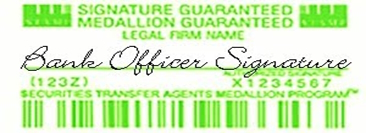
A Medallion Signature Guarantee or Signature Validation Program Stamp is a widely accepted way to protect you and the Fund by verifying the signatures on your request. Eligible participating members of the following programs may execute a Medallion Signature Guarantee or Signature Validation Program Stamp: Securities Transfer Agents Medallion Program (STAMP); Stock Exchange Medallion Program (SEMP); and New York Stock Exchange, Inc., Medallion Signature Program (MSP). Many commercial banks, trust companies, credit unions, savings associations, brokerage firms, and registered broker-dealers can provide you with a Medallion Signature Guarantee or Signature Validation Program Stamp. You should verify with the institution that it is an acceptable (eligible) guarantor for the Stamp2000 Medallion Program prior to signing the request. A Notary Public is not an acceptable guarantor.
22. Will I receive an IRS Form 1099 to use when filing my taxes?
Generally, Affected Investors will not receive any Form 1099 or Form 1042-S reporting from the Fund in respect of a remediation payment, other than for an interest component.
Affected Investors will receive a payment which will have both a capital and interest component. The interest component will be treated as interest for US federal income tax purposes, which is generally treated as income in year of receipt. Affected Investors may be required to provide US tax documentation (e.g., Forms W-9, W-8) to avoid US withholding taxes. Interest paid is reportable to US persons that are not exempt recipients (e.g., partnerships, individuals) on Form 1099-INT if the amount of interest is $2,000 or more. An example of an exempt recipient is a Corporation, Bank, Broker. For IRA accounts, if an Affected Investor directs a distribution to be paid outside of the IRA it will be reported on Form 1099-R. Otherwise, there is no Form 1099 reporting to the IRA, and the applicable IRA reporting would be done by the custodian/trustee of the IRA (e.g., upon distributions from the IRA itself). Affected Investors that are, or are presumed to be, a US non-resident may receive a Form 1042-S. Affected Investors should consult their tax advisor to determine the tax consequences with respect to the receipt of cash or shares, as the case may be.
You should consult with your financial advisor or tax professional prior to cashing this check to determine the potential tax consequences and appropriate tax treatment for your particular situation.
23. If the check is made payable to “ABC custodian fbo John Smith” (as an example), if the investor deposits the check into the IRA is the deposit considered a contribution?
No the deposit of the check would not be considered a contribution. Per IRS Revenue Ruling 2002-45, if there is a deposit made into the IRA that is considered a restorative payment which restores losses from the IRA are not considered contributions and would not impact the amount a participant can contribute to an IRA as long the payment is limited to the actual harm suffered by the IRA including compensation for lost earnings. You should consult with your tax professional to determine potential tax consequences including but not limited to whether your check is considered a restorative payment.
Yes, if the investor cashes the check and receives the funds personally rather than deposit it to the IRA it is considered a distribution tax as ordinary income under IRC §408(d)(1) in the year which it is received and subject any applicable early withdrawal penalties under IRC §72(t)(1).
24. If an IRA check does not get deposited into IRA account within 60 days, it is considered distribution?
If an IRA check (i.e., a distribution from an IRA intended for rollover) is not deposited into another IRA or eligible retirement plan within 60 days of receipt, the amount is generally treated as a taxable distribution to the IRA owner. See IRC §408(d)(3)(A)(i); Reg. §1.408-4(b)(1) and IRC §408(d)(1). Under IRC § 408(d)(3)(A), for a distribution from an IRA to qualify as a tax-free rollover, the distributed funds must be contributed to another IRA or eligible retirement plan no later than the 60th day after the day the distribution is received.
[1] An NRA is a person who is not a U.S. citizen or U.S. resident alien. Additional information is available from the Internal Revenue Service at: https://www.irs.gov/individuals/international-taxpayers/taxation-of-nonresident-aliens